
We live in an age when we face many global challenges: climate disruption, declining biodiversity due to industrial practices, polluted oceans, the spread of nuclear weapons, pandemics and, not least, local wars.
The truth is that as human civilisation has advanced, direct large-scale conflicts have become less frequent. But can we really claim that war will keep fading and eventually disappear? Can we be sure that violence does not spring from the human soul?
The question of human violence has troubled people for centuries—from thinkers like Thomas Hobbes and Jean-Jacques Rousseau to modern psychologists such as Jared Diamond and Steven Pinker. Pinker has argued that humans have a natural tendency toward violence but that violence and violent death have decreased with the rise of modern societies and more developed institutions and laws. That view remains contested.
Thomas Hobbes held that life in the state of nature—that is, without the authority of a political state—is “solitary, poor, nasty, brutish and short.” Not long after, Rousseau disagreed and insisted that human nature is essentially good and that we could have lived in peace and contentment long before any institution like the modern state. For Rousseau, things began to go wrong when humans entered the agricultural revolution, which led to property, economic interdependence and inequality. Inequality breeds social division.
Where societies had once been held together by strong social bonds, rising inequality soon turned us into ruthless competitors for resources and power. Rousseau’s view is, in essence, that while there is goodness and solidarity within us, political and social institutions are what can make us cruel.
At first glance, then, Hobbes and Rousseau represent two opposite poles in answering one of the oldest questions about human nature: whether humans are inherently good or bad. That question echoes older theological debates about original sin—something philosophers might seem ill-placed to settle.
After all, humans are complex beings capable of both good and evil. Reaching a single, definitive conclusion may seem naive. Hobbes did not really believe we are evil by nature. His view was rather that we are not ready to live together in large political societies. We are not purely social creatures like bees or ants, who instinctively cooperate for the common good. We have self-interest and we look out for ourselves first.
We care about our reputation and our material wellbeing, and our desire for status leads to conflict and competition over resources.
Today, in the 21st century, with war and genocide still with us, the question feels more urgent than ever. Thousands of religions, ideologies and economic doctrines, each convinced of its own rightness, have existed on this small blue corner we call home.
Every builder and destroyer of civilisations, every leader, soldier, citizen, elder or child, rich or poor—everyone we know is our relative and lives beside us, here, on this tiny blue grain of sand. How much blood has been shed, and will be shed, in the name of some king or leader who wants to rule one small part of our dot for a moment?
How much brutality have the inhabitants of one corner of this small dot shown toward the barely different inhabitants of another? How often have their misunderstandings been trivial and how willing have they been to kill one another over something that, in the scale of the universe, means nothing?
The impression that we are more important than others and the illusion that we hold a privileged place in the universe are called into question when we step outside our usual frame and see our planet as it really is—without borders, barriers and oppositions. No one person is more important than another; we are all important, tiny links in a single chain of life that began four billion years ago and continues today.
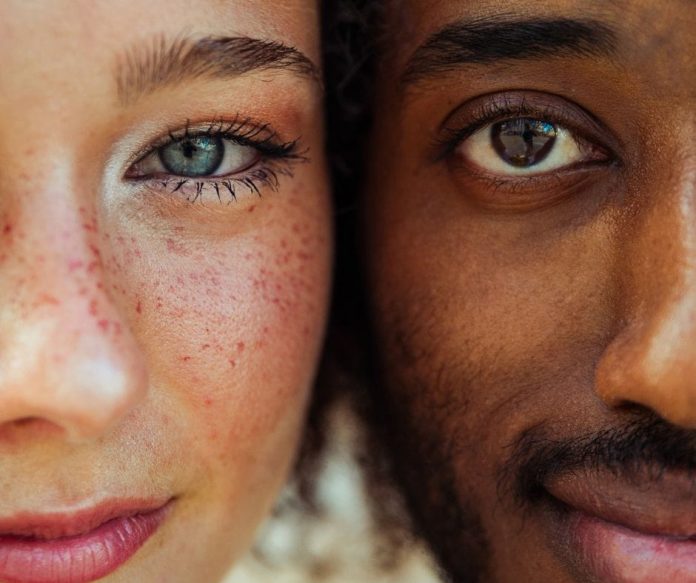
We need to understand that as humans we have more in common than what divides us, and to work together to make our world better—united, to succeed where past generations have failed.
*This piece is dedicated to the tens of thousands of civilians, Palestinian and Israeli, who were killed during the war between Hamas and Israel.
For more on connection and how we relate to one another, see Ethics and Empathy: Priceless Gifts for a Society of Peaceful Coexistence and Empathy: How to Feel and Respond to Others’ Emotions.
Happy Life Team